Research
Control the beam.
Extend the measurement.
A common thread runs through our work: shaping electron beams to reach new regimes of acceleration, radiation, and measurement.
01 · Electron sources
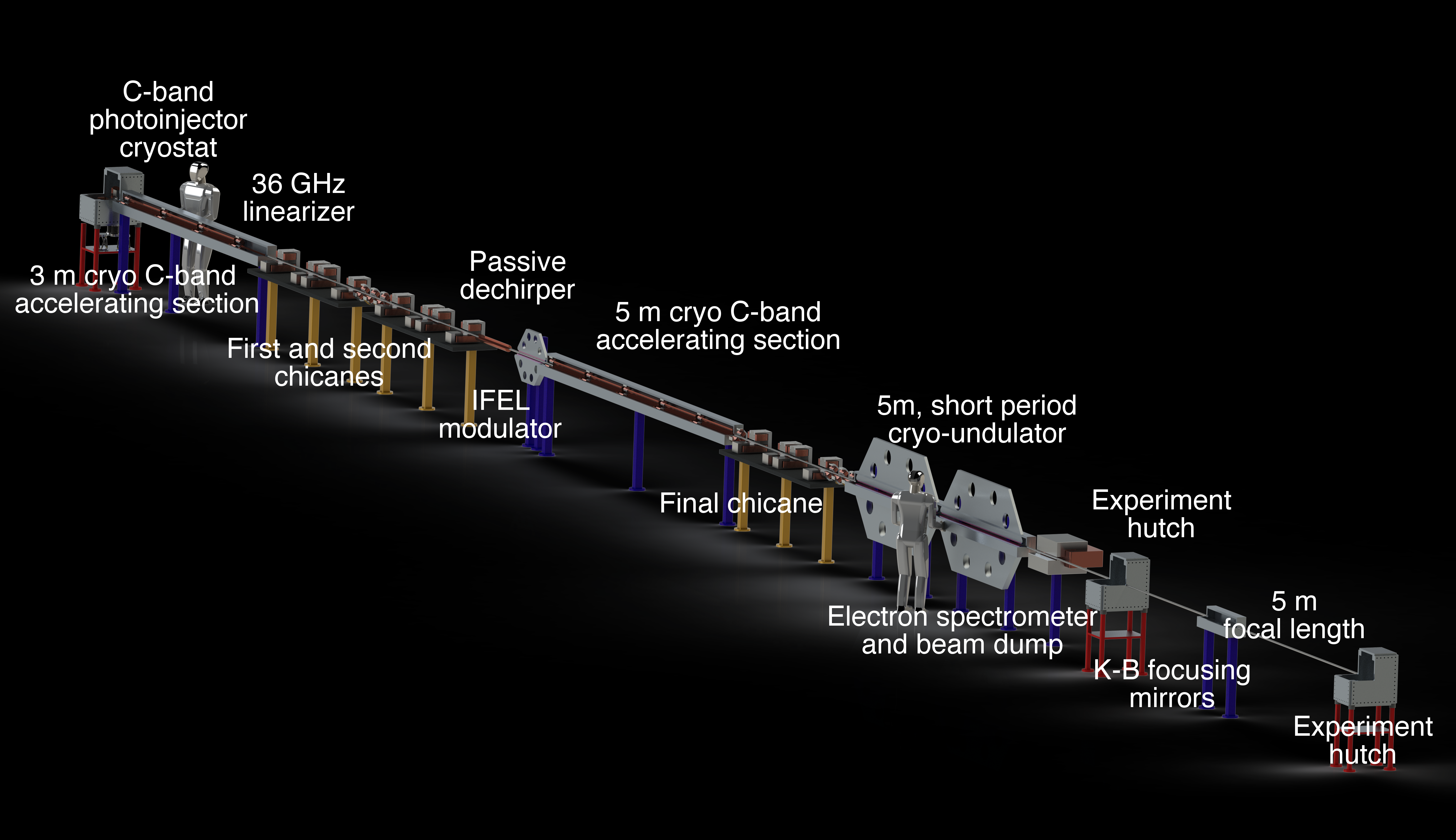
High-brightness electron beams
Beam quality begins at the source. Our work on photoinjectors, beam compression, and phase-space control seeks to deliver short pulses while preserving low emittance and useful charge.
This connects fundamental beam dynamics to practical requirements for diffraction, microscopy, and coherent radiation.
Read: sub-10 fs electron beams ↗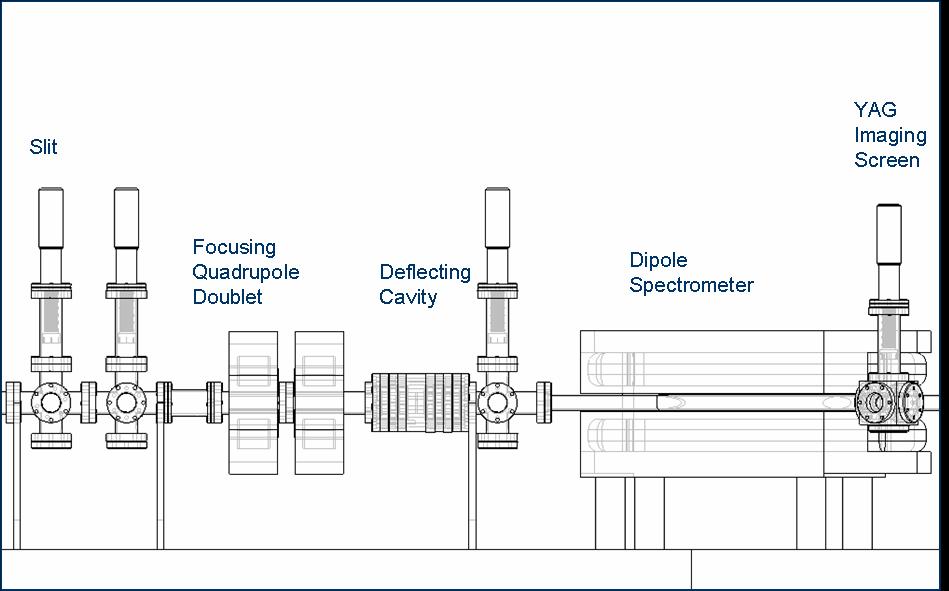
02 · Probes of matter
Ultrafast electron science
Short electron pulses can probe structural changes on fast time scales. We develop sources and beamlines for ultrafast electron diffraction and microscopy, linking accelerator techniques to questions in materials science.
Our spectroscopy work includes radiofrequency manipulation of electron energy spread and the design of electron spectrometers. These directions bring beam physics into close contact with condensed matter experiments.
Electron spectroscopy with the Kogar group ↗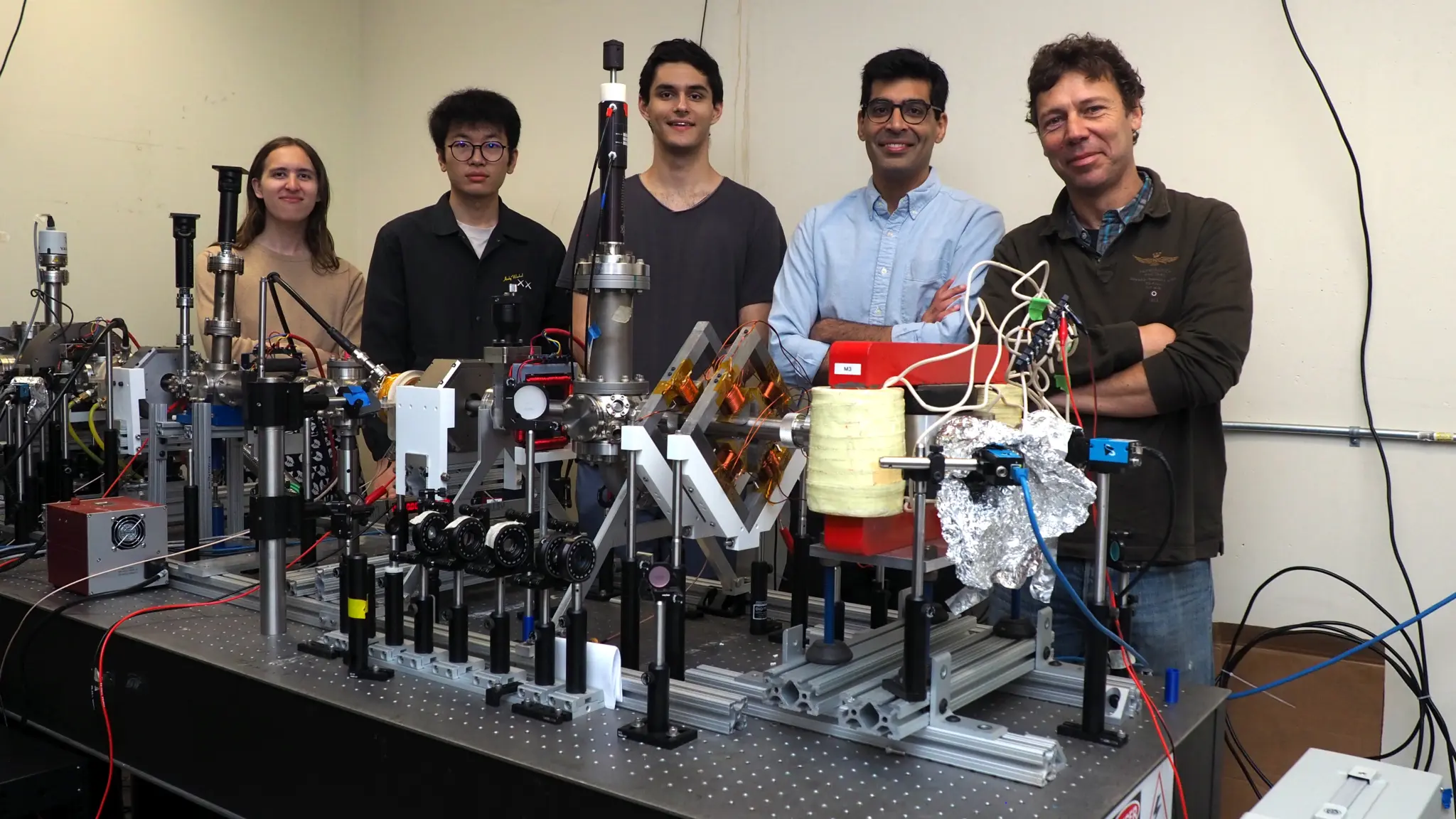
03 · Coherent radiation
Free-electron lasers & light sources
Free-electron lasers convert organized electron motion into coherent radiation. Our interests include nonlinear and superradiant emission, tapered undulators, and efficient energy exchange between lasers and electron beams.
Related studies examine compact light-source concepts and how advances in electron-beam quality could enable shorter radiation pulses. In 2026, we reported a relativistic analog of the Brewster effect in shallow-angle electron–photon scattering, demonstrating how polarization controls the emitted radiation.
Read: a plasma-driven attosecond source concept ↗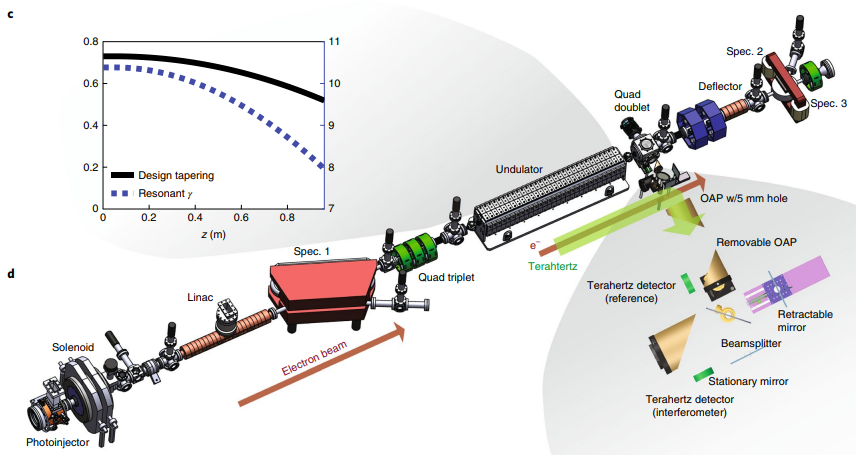
04 · Accelerator methods
Advanced acceleration & diagnostics
Laser-based acceleration and laser–electron interactions offer ways to manipulate beams on scales beyond conventional radiofrequency technology. Our research includes inverse free-electron laser interactions and advanced beam control.
Diagnostics are essential to this work: reconstructing longitudinal phase space, measuring arrival time, and separating changes in energy from changes in the beam’s spatial distribution.
Read: longitudinal phase-space tomography ↗Within a broader laboratory
PBPL brings together several research programs and facilities. Its ultra-compact X-ray FEL concept is one example of the broader laboratory’s work.